8 Best Free Typing Games to Raise Your WPM in 2026
Typing games have a strange reputation: most are either children's drills or competitive speedrun tools with nothing in between. The eight below cover the whole range, and each one is useful for a specific stage of improvement - which matters, because practising the wrong thing is why most people sit at the same WPM for years.
Stage 1: Find Out Where You Actually Stand
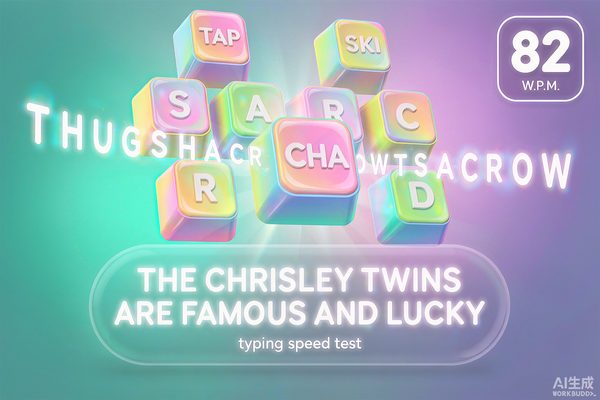
Before playing anything, measure yourself honestly. A one-minute test measures burst speed, which is flattering and useless. Use a test that runs at least three minutes and reports both WPM and accuracy, because the two numbers together tell you which problem you have.
- Accuracy below 95 percent with high speed: you are racing and backspacing. Slow down by 20 percent and the real speed will appear within a week.
- Accuracy above 97 percent with low speed: you are being careful. Speed work will help you, and it is the easier problem to fix.
- Speed collapses after two minutes: this is stamina, not skill. Practise in five-minute blocks rather than thirty-second bursts.
Stage 2: Fix the Finger Mapping
If you are not touch typing - if you look at your hands - no amount of game practice will take you past about 50 WPM. This stage is boring and it is the only stage that requires a deliberate decision to slow down.
What to do
- Learn the home row position properly: index fingers on F and J, which have physical bumps on almost every keyboard.
- Cover your hands or look away for ten minutes a day. Speed will drop by half immediately; that is the cost of the switch.
- Practise the keys you avoid. Most people have three or four keys they consistently mistype - often Q, Z, and the punctuation row.
- Give it two weeks before judging results. The dip before the improvement is real and it is temporary.
Stage 3: Build Speed With Games
Once your fingers know the layout, games become genuinely useful because they add pressure that plain drills lack. The best ones for this are short, repeatable, and score-based.
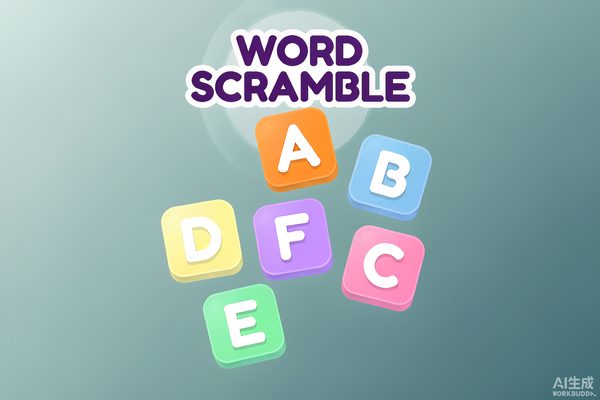
Word Scramble - best for pattern recognition
Scrambled letters force you to read whole words rather than individual characters, which is the skill that separates 60 WPM from 90. Fast typists do not see letters; they see word shapes. Scramble drills train exactly that.
Word games with a clock - best for sustained speed
Any word game with a countdown creates the mild pressure that makes practice stick. The key is duration: sixty seconds is too short to build stamina, so play rounds back to back rather than judging a single round.
Reflex games - best for accuracy under load
Snake, reaction timers, and similar reflex games do not train typing directly, but they train the thing that breaks typing speed under pressure: the panic response. Players who tense up at high WPM usually also tense up in reflex games.
Stage 4: The Plateau at 60 WPM
Almost everyone plateaus somewhere between 55 and 70 WPM, and the reason is always the same: they stop practising the words they are bad at. Casual typing repeats your personal top two hundred words, so those get fast while everything else stays slow.
- Practise text you would never choose. Legal text, technical documentation, and code are all full of awkward sequences that ordinary prose never contains.
- Practise punctuation deliberately. Most plateaued typists lose more time on commas, capitals, and apostrophes than on letters.
- Alternate speed days and accuracy days. Trying to improve both at once usually improves neither.
- Type with a metronome or a steady rhythm for five minutes. Rhythm hides hesitation, and hesitation is what caps speed.
How Long Until It Shows
Finger mapping takes about two weeks of daily ten-minute sessions. Speed gains from 40 to 60 WPM typically take four to six weeks. Getting from 60 to 80 is a longer project - usually two to three months - because at that point you are removing habits rather than learning new ones.
Typing Games FAQ
What is a good typing speed?
Around 40 WPM is average for adults. 60 to 80 WPM is comfortable professional typing. Above 100 WPM is rare and usually comes from years of daily use rather than targeted practice.
Do typing games actually improve speed?
Yes, but only after you can touch type. Games add useful pressure and repetition; they cannot teach finger mapping, which has to be learned slowly and deliberately first.
Should I prioritise speed or accuracy?
Accuracy first, always. Speed follows accuracy naturally, while speed built on errors collapses the moment the text gets harder. Aim for 97 percent accuracy before pushing WPM.
Why do I type fast for one minute and slow after?
That is stamina, not skill. Short bursts use a different effort pattern than sustained typing. Practise in five-minute blocks to build it.
Is it worth learning to touch type as an adult?
Yes, if you type daily. The switch costs about two weeks of feeling worse, and then saves you an estimated 20 to 30 percent of typing time for the rest of your life.
Start Typing
Take the typing test first to get a baseline, then use Word Scramble for pattern recognition and a reflex game for pressure training. Measure again in two weeks - the number is the only honest feedback you will get.