How to Play Mahjong Solitaire: Rules, Layouts, and the Moves That Clear the Board

Search for mahjong and you usually want one of two games. The original is a four-player tile game with melds, scoring, and a wall. The one people open in a browser is mahjong solitaire: a stacked layout of tiles, and you remove pairs that are free on both sides. This guide is about the second one, because that is the version you can finish in a few minutes with no opponent.
What a legal match looks like
Tiles come in suits (dots, bamboo, characters), honour tiles (winds and dragons), and often flowers or seasons. Identical tiles match. Flowers match other flowers, and seasons match other seasons, even when the picture differs. Everything else has to be the same tile.
- A tile with another tile on top of it is blocked. Clear the layer above first.
- A tile with neighbours on both the left and the right is blocked, even if nothing is on top.
- A tile with a neighbour on only one side is free. So is a tile sitting alone.
- Removing a pair can free the tiles beside it and the tile underneath. That is the whole puzzle.
Play the edges before the middle
The middle of a mahjong layout looks busy, so most players start there. That is the move that loses. Tiles in the centre are usually covered or boxed in. The tiles that are already free sit on the outside, and taking them is what uncovers the next free pair.
- Scan the top layer first. Those tiles are never covered, so they are the only ones you can be sure are candidates.
- Prefer a pair that frees a buried tile over a pair that only tidies an edge you can still reach later.
- When two legal pairs use the same tile type, take the one that sits higher in the stack.
- Leave a rare tile (a dragon, a wind, a flower) if its only match is deep in the layout. You may need that free copy later.
The three moves that strand a board
Matching the first pair you see
A legal move is not always a good one. If both tiles are already free and neither is covering anything, removing them changes nothing except your options. Spend that click on a pair that uncovers a tile instead.
Clearing one side completely
A tile only needs one open side. If you strip every tile off the left of a row and leave the right blocked, you have not freed the row - you have just moved the blockage. Open the side that releases the larger stack.
Using shuffle as a first resort
Several versions offer shuffle or undo. Undo is information: it tells you the last pair was a dead end. Shuffle throws away the layout you were reading. Use it when no free pair remains, not when you are unsure which pair to take.
Which version to open
The matching rule is the same across the versions on this site. Pick by how the board is presented, not by the name on the tile art.
- Tile Connect - pairs must be joined by a path of at most three straight lines. Good if you want the matching rule with an extra constraint.
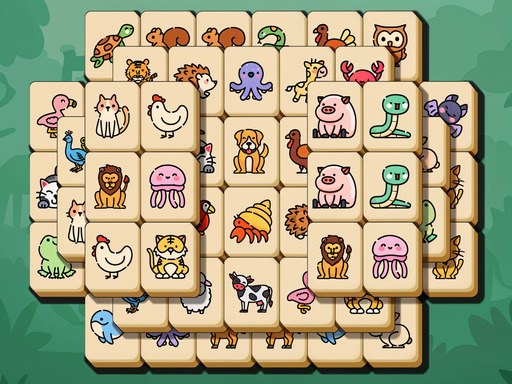
- Critter Mahjong Solitaire - a stacked layout with the classic free-tile rule. Start here if you want the game described above.
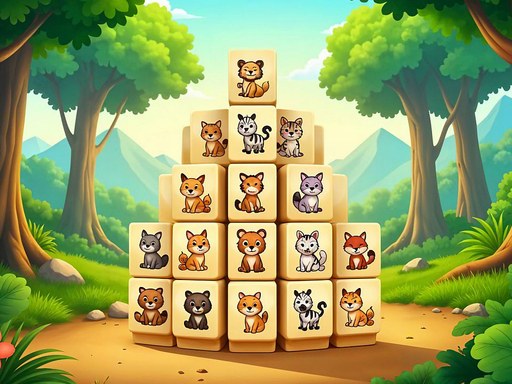
- Animal Kingdom Mahjong and Candy Mahjong Tiles - the same removal rule with clearer pictures, which helps if the traditional suits are hard to tell apart.
Play a board
Open any of the games above and apply one test before each click: does this pair uncover something, or does it only remove two tiles that were already free? If you can answer that, you are playing the puzzle instead of clicking matches.